
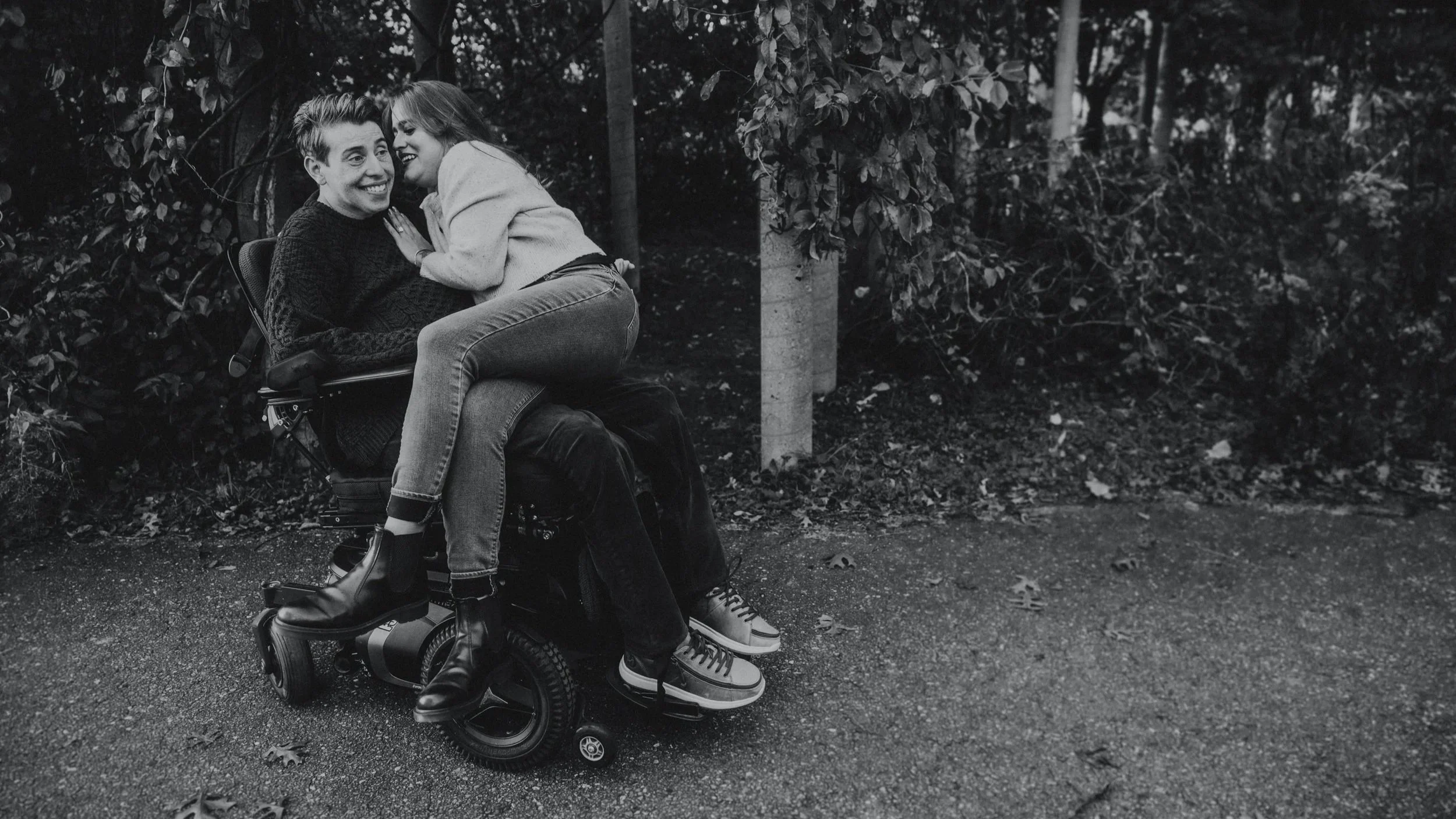
We need to rethink our definition of disability
When most able-bodied people think of the word disabled, they think of people who are permanently disabled, or in a wheelchair perhaps. But that’s not the only type of disability there is, and not all disabilities are permanent. The disabled community is the only minority group that anyone could join at any time, at any age, permanently or temporarily. Even something as simple as spraining your ankle is a disability (albeit temporary) that may require accommodations (crutches, etc.).
Since at least 13% of all Americans are disabled, it’s important to talk about how you can build accessibility into your wedding day from the beginning to create a safer, more welcoming environment for all of your guests, and to “future proof” your planning in case you (or a family member or someone from your wedding party) end up injured before your wedding. Let’s dive in!
The Venue
There are lots of considerations when it comes to your venue that have an impact on accessibility. In fact, I would argue it’s the number one way weddings become inaccessible. If you’re thinking to yourself “I don’t have anyone attending who is disabled”, keep in mind that not only is that statistically unlikely, but that you yourself or someone you love could become temporarily disabled before your wedding day just by breaking a bone or spraining an ankle, which is why making accessibility a consideration ahead of time is so important.
Here are a few things to consider related to accessibility as you look at wedding venues:
Ask the venue up front about their ADA (Americans with Disabilities Act) compliance, and how accessible their venue is for people with mobility issues or those who use wheelchairs.
Keep an eye out for navigation concerns with your venue - you want a venue that a person in a wheelchair (or on crutches) could navigate without difficulty. This includes looking for red flags like stairs that don’t have a ramp or elevator as an alternative, large lips on doorway floors that a wheelchair may have difficulty getting over, ceremony sites that are on grass (especially those on hills) or uneven terrain.
Keep an eye out not just inside the building, but also for things outside the building as well, such as whether or not the venue has a paved path (with wheelchair access) from the parking area to the building.
Your guests aren’t the only folks who need to be able to move around easily! Your vendors will also need to be able to move around the space to do their jobs well (photographers included - we carry a lot of heavy, bulky camera equipment). It’s important that whatever venue you choose is actually big enough to comfortably fit all guests and vendors and for those folks to all be able to move around easily between and around tables, etc. If I as a photographer can’t squeeze between two tables because they’re packed too tight, someone using a wheelchair or other mobility devices definitely won’t be able to.
Speaking of seating, seats without arms, and ones with higher weight capacities, are considerably more accessible than smaller, more limiting chairs.
The Food & Drinks
Many couples take a lot of care with their food & drink choices already, but believe it or not, this can also be an accessibility issue!
Here some things to consider when it comes to food & drink accessibility at your wedding:
Make sure to find out if any of your guests (and their plus ones!) have dietary restrictions that you need to accommodate for, such as celiac disease (needing gluten-free food), severe allergies (like a peanut allergy), vegetarian or vegan diets, etc.
Work with your caterer to come up with a game plan that accommodates these dietary restrictions (you want to show equal hospitality to all your guests). If your caterer cannot accommodate a certain restriction, arrange to have a meal for that guest brought in from somewhere else at the same time dinner is being served for your other guests. You can delegate this task of course, but make sure to communicate with the person you’re delegating to and the wedding guest so that they know they’re being taken care of.
If you’re serving food buffet-style at your wedding, make sure to clearly label all food and at minimum, ensure you’re indicating whether the food is GF, nut-free, dairy-free, vegetarian, or vegan. This will also save you (or more realistically your catering staff) a lot of unnecessary questions about the food.
Consider having signature mocktail options in addition to signature cocktails for your wedding so that guests that either can’t drink or prefer not to can still celebrate with you. And if you’re doing a champagne toast, make sure sparkling water & sparkling juice are offered as alternative options.
The Sound & the environment
Not all disabilities are physical, and many folks, even those who don’t consider themselves disabled, have a difficult time with certain environmental factors at weddings. You may also have guests that are hard of hearing, or even deaf, and there are ways to help you accommodate them.
Here some things to consider when it comes to sound and environmental accessibility at your wedding:
Consider working with your DJ or venue to ensure that there are mics available for you and your soon-to-be-spouse for your vows (not just your officiant). That way folks who are hard of hearing will have a better chance of being able to hear you. If you’re feeling extra fancy, you could have someone use a real-time transcription software so that your vows can be read by those who are deaf, and that way they are still included in the magic of your ceremony.
Ask if your venue has a quiet room that you can set up for people who may be easily overstimulated and need some “down time” throughout the celebration day. A quiet room is a great way to accommodate nursing parents as well!
If you have any guests who are sensitive to flashing lights (for instance, those who have epilepsy), make sure to let the DJ know ahead of time so that they can adjust the lighting they use during the dancing portion of the evening.
If there will be kids at your wedding, having an area especially for them with activities, coloring books, etc. is a great way to make sure kids have a fun time at your wedding too!
Putting thought into these considerations may take a little more time up front, but putting in that effort will ensure that all of your guests feel welcomed, appreciated, and cared for, and that you’re future proofing your wedding in case you, your soon-to-be-spouse, or a close friend or family member have an unexpected need for accessibility on the wedding day!
—Sam